14 year old cat with possible UTI
Ask our vets a question or search our existing threads. If you've got a question about your pet, this is the place to get an answer.
Author
Topic
RobbieH
Participant
Hello I took my female cat to the vet a week ago because for some time (Possibly a couple of weeks) she was having symtoms of a UTI that I did not pick up on I took her vet when I noticed a slight bit of blood on her vulva the vet said that he could not feel anything wrong with her kidneys or bladder and gave her an antibiotic injection that lasts about 12 days I believe and some painkillers I had to give to her for 5 days I want to add that this whole time she has had an appeite and she drinks water (Not much however because she does eat a fair bit of wet food)
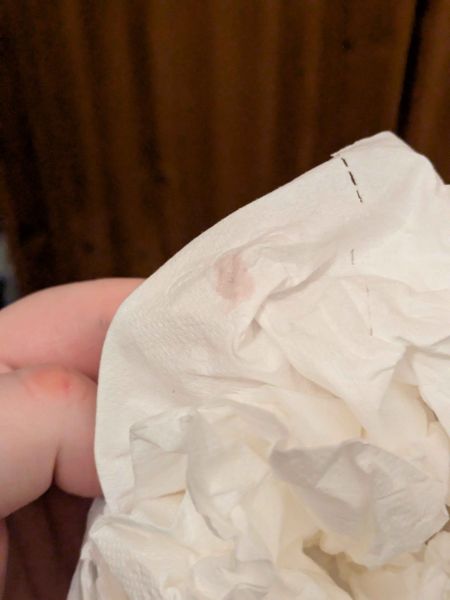
today being the 7th day since I took her vet and she had the antibiotics I heard her meowing a couple of times in the litter box and I noticed blood in her urine and some slightly on her vulva I will post pictures of what I saw
Is it normal to still be getting some blood in her urine 7 days into antibiotic treatment?
Thanks
Robbie 
Report
Author
Replies
RobbieH
Participant
I just want to add that she has peed since then without meowing in the litter box and with no blood in the urine
Report
Author
Replies
Liz Buchanan BVSc
Keymaster
Hello and thank you for this interesting case.
I have never 'felt' urinary tract inflammation through the abdominal wall and would argue that it cannot be done unless a cat becomes, for example, 'blocked.' 'Blocked' cats are emergency cases; unable to urinate, their bladders full up and the tubes supplying the bladder from the kidneys (the ureters) thereby become backed up with urine, eventually stopping the kidneys from working. At this point, it becomes a race against time to avoid permanent kidney failure. One of your vets' priorities would be to rule out a 'blocked cat' emergency; gently palpating the bladder and kidneys can be helpful because the shape and size of these organs can be assessed in this way. They can also feel for lumps, bumps and kittens (you don't say whether or not your cat has definitely been spayed - 14 years old is obviously very advanced in years for a current pregnancy). I wonder if this is what they meant when they said that they couldn't feel anything.
Another possibility for blood where you mention may be that it came from the reproductive tract. If your cat hasn't been speyed - or even if she has - it may be that lumps or changes here are a possible differential diagnosis.
However, assuming the bladder for now; blood in urine has a few common differentials. The most common one is not actually a UTI which stands for urinary tract infection and implies bacteria in the urine. This is much rarer than it was thought to be when I qualified, 20 years ago. Given modern concerns about inappropriate use of antibiotics, the norm in the uk would be to diagnose such a case fully - perhaps from a sterile urine sample and culture - before (the appropriate) antibiotics are given. A far more common possibility is urinary tract inflammation, or 'Cystitis,' which is a painful condition and doesn't respond to antibiotics. It tends to be associated with stress. Sometimes, a source of stress is obvious eg the owner just bought a new dog. But commonly, it is much more subtle and can relate to internal changes the cat can't tell you about, such as another disease coming on, or a subtle shift in household dynamics that the owner is barely aware of. The action in these cases is threefold; to give anti-inflammatories to reduce the pain (which is a stressor in itself - cats do not make it obvious when they are in pain), to identify and reduce any causes of stress and to identify any underlying bodily causes.
I hope that something here helps. If you type 'bladder' and 'cat' into the search-bar of the blog, I would expect you to find a wealth of interesting articles.
Report
Author
Replies
Liz Buchanan BVSc
Keymaster
I am pleased that your cat has urinated normally since (this completely rules out a blockage) but would still be concerned about the blood. Blood in urine is not there all the time when it's present (and sometimes is so watered down that it would need a urine test to spot). It is normal for cystitis to wax and wane and early treatment can be key.
For completeness, blood in the urine can be caused by bleeding kidneys or lumps, or by clotting problems. Sterile cystitis is by far the most common of these.
Report
Author
Replies
RobbieH
Participant
Hi yes she is spayed a year back she had a blood test and she was in good health I assume it being a year back its probably not recent enough to go off of she has urinated multiple times since that urine that had blood in it and all has been fine and no meowing when I was at the vet he did mention that she has lost weight since our last visit (A year ago)
Report
Author
Replies
RobbieH
Participant
We do have a dog but she is seperate from the dog most of the time sometimes they do go near each other on the stairs and she will hiss at the dog and the dog backs off about a year ago we did move house as well
Report
Author
Replies
RobbieH
Participant
Do you think it would be posible to collect some urine and bring that into the vet for testing? the trip to the vets is very stressful for my cat
Report
Author
Replies
RobbieH
Participant
I also want to add that I suffer with anxiety and I am around my cat almost all day would my anxiety have caused her to feel stressed?
Report
Author
Replies
RobbieH
Participant
She was on painkillers for 5 days and during that time I do feel like she had more energy and I don't believe I noticed any blood or meowing in the litter box
Report
Author
Replies
Liz Buchanan BVSc
Keymaster
This sounds very encouraging. It does seem possible or even likely in this case that your cats cystitis was either painful - and this the drugs eased it - or triggered by something painful, or both. Please do report this back to your vets, who may be able to give a longer prescription and also to discuss further investigations or aspects such as lifestyle factors that you can change. Altering litter tray provision, minimising sources of stress and promoting water intake for example, may help to prevent recurrence in the future.
Report
1
You must be logged in to create new threads, or access some of the forums
