Anemic dog having splenectomy
Ask our vets a question or search our existing threads. If you've got a question about your pet, this is the place to get an answer.
Author
Topic
lisaann1789
Participant
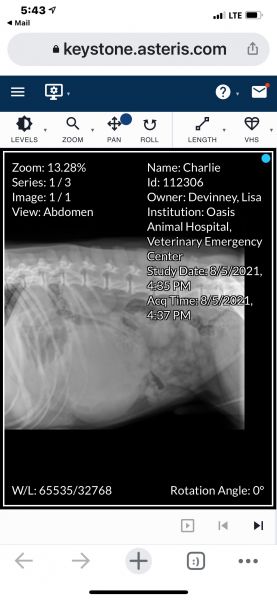
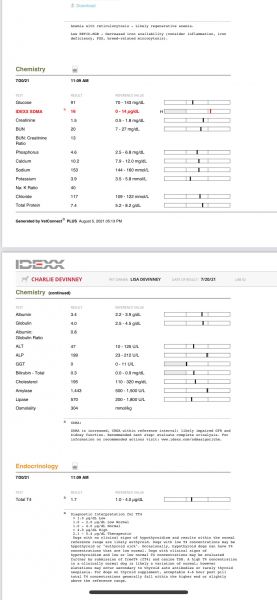
I need 2nd opinions. My 12 year old lab is getting a splenectomy Tuesday due to a large mass found. I have been told he is slightly anemic and didn't seem a concern for surgery. Should I be worried about this surgery? Any advice would help! I have posted his x ray of the mass and bloodwork/urine culture. 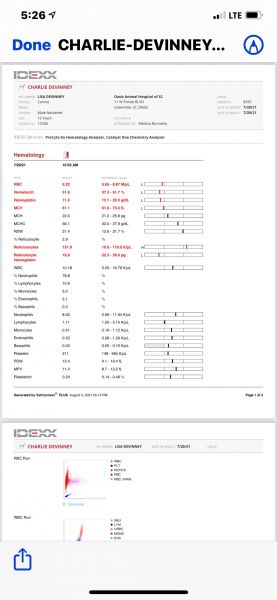
Report
Author
Replies
Liz Buchanan BVSc
Keymaster
Hello! I'm afraid the first thing to say is that we do not give second opinions on this site. I don't know your dog, haven't examined your dog. A second opinion is obtained by asking your vet to a specialist for one - either a surgical or emergency specialist. However, I will tell you some general points about these operations in general.
Report
Author
Replies
Liz Buchanan BVSc
Keymaster
First, is that dogs with splenic lumps tend to bleed from the lump - sometimes in dribs and drabs, sometimes continuously - until surgery is done to remove the spleen. Ideally, yes, we wouldn't operate on an anaemic animal but these are typically catch 22 situations: if a dog is anaemic because they are bleeding from the spleen, and the only way to stop the bleeding is to operate to remove the spleen. Typically these are emergencies and need to be done right away, but please take your vets' or their emergency counterparts' advise on this as I don't know the case in question (we don't review bloods or radiographs for the same reason).
Vets have found that giving fluids to these patients can be helpful because what red blood cells there are, are carried better around the body when the circulation is supplemented. Some such patients even need blood transfusions, or blood substitutes, but your vet will discuss their plan for this kind of thing with you.
Removing splenic masses are big operations and do carry a degree of risk. However, there may also be considerable risk attached to not performing the surgery. Ask your vet what they expect of the long term prognosis.
When surgery goes well, it is possible to make the patient feel much better very quickly.
Search also: For splenic lumps, in the blog.
Report
Author
Replies
Liz Buchanan BVSc
Keymaster
One example of a haemangiosarcoma I removed from a dog was in an emergency clinic. It was put on fluids (and had some blood) and the lump was removed that night. The patient was much better the next morning but I heard it had passed away about a year later from metastases from the lump, which was a tumour.
Best of luck and please let me know how you get on.
Report
Author
Replies
Liz Buchanan BVSc
Keymaster
If the vet feels that the operation needs to be done right away, I would normally take them at their word.
Report
Author
Replies
Liz Buchanan BVSc
Keymaster
If the vet feels that the operation needs to be done right away, I would normally take them at their word.
Report
Author
Replies
Liz Buchanan BVSc
Keymaster
I have come back to this because someone on the open Facebook group suggested referring the radiograph to a specialist radiologist. Perhaps this is normal in the US. If, in the UK, I had a situation where I was not sure if a lump was bleeding to the extent it needed removing as an emergency or not, there would be other, faster ways to find out than referring the rads; a phone call to an emergency medicine specialist, for example. As far as I am aware, however, this is not the situation here.
Report
Author
Replies
Liz Buchanan BVSc
Keymaster
Most vets have other tools to assess internal bleeding within their clinic eg TS / PCV used together, or if necessary a FAST scan. You could ask the vet if they have amassed enough information to be sure that the op is needed;. We generally tend to be honest.
Report
Author
Replies
Liz Buchanan BVSc
Keymaster
(We being vets in general;. I do not know your vet or this case and nor am I in an ethical position to check the rads ).
Report
1
You must be logged in to create new threads, or access some of the forums