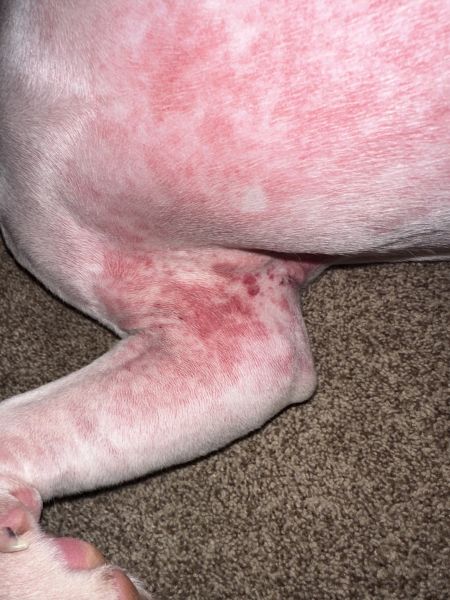
Pitbull skin red inflammed
Ask our vets a question or search our existing threads. If you've got a question about your pet, this is the place to get an answer.
Author
Topic
Pitbull1221
Participant
Hello,
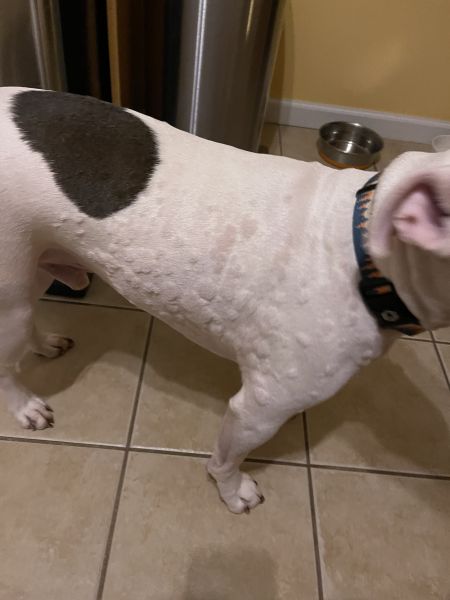
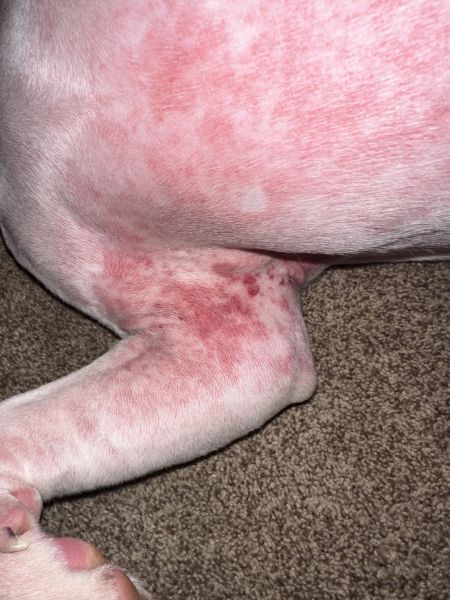
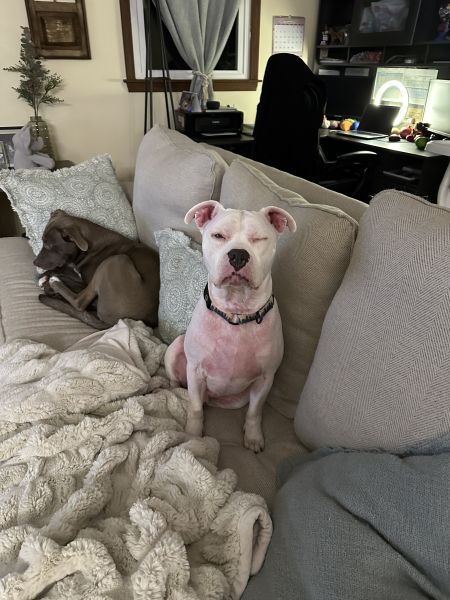
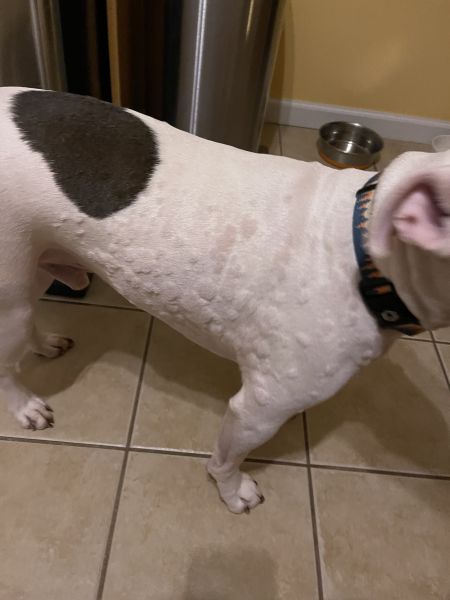
trying to find answers on the below presentation of skin in my 3 yr old pitbull, the below developed over 3 days and has seen local vet which has deemed this an allergic reaction vasculitis to an unknown agent. However no response to prednisone and seems to be worsening. Any help would be greatly appreciated as I am at a loss for answers and feel terrible for my little guy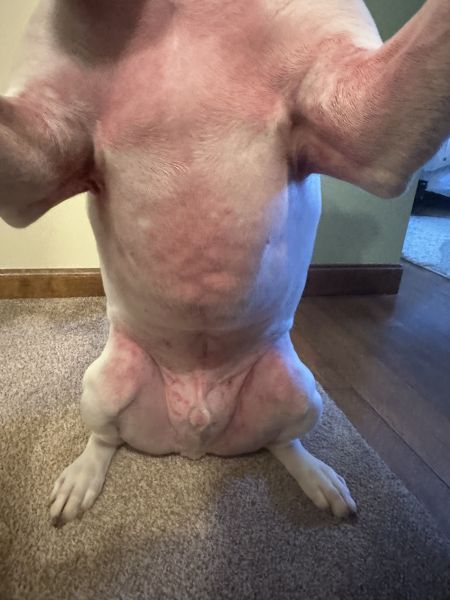
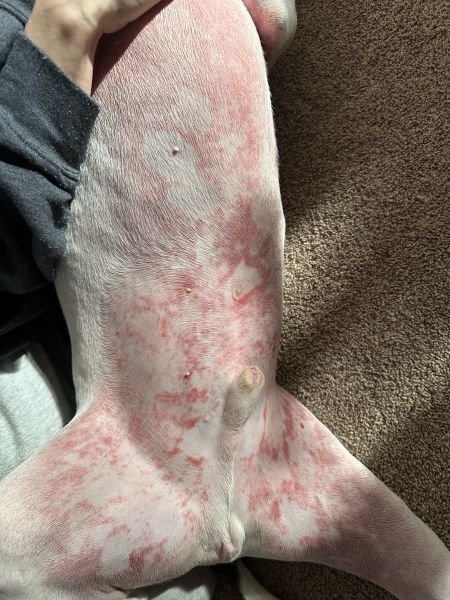
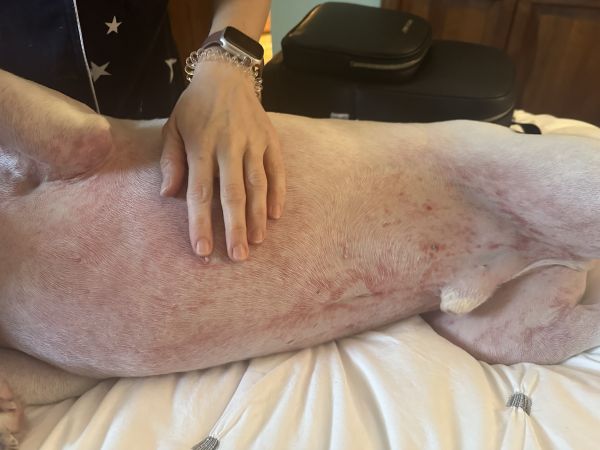
Report
Author
Replies
Liz Buchanan BVSc
Keymaster
Hello - I'm not sure about the timescales involved here. On one hand, it could be that the rash was partially responsive to the steroid and that things deteriorated as the steroid wore off (depends on length-lasting of steroid injection and interval between changes in the symptoms). However, it could also be that the rash deteriorated as a result of the steroid. This could happen in the event of certain diseases including mites, fungal diseases and even viral disease. Either way, your vet needs to know; please keep them informed of this development in order that they have the oppportunity to assess the changes, draw conclusions and make effective / appropriate decisions.
Report
Author
Replies
Liz Buchanan BVSc
Keymaster
Im not clear whether your vet is aware of the development or not, but if not they should be informed with some urgency, or perhaps their emergency vet could triage for you if out of hours.
Report
Author
Replies
Pitbull1221
Participant
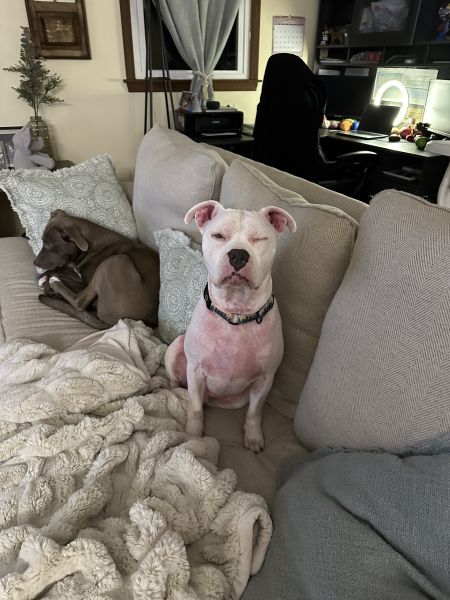
I am providing daily updates to our vet, hives started last Wednesday, red skin and rash has progressed and not improved as of today. Prednisone is an oral tablet 60 mg (30 mg morning and night) and no improvement.
Report
Author
Replies
Pitbull1221
Participant
I am providing daily updates to our vet, hives started last Wednesday, red skin and rash has progressed and not improved as of today. Prednisone is an oral tablet 60 mg (30 mg morning and night) and no improvement.
Report
Author
Replies
Pitbull1221
Participant
Additionally he has been to an emergency vet on Sunday, then to our vet on Wednesday, and then another in office visit yesterday.
Report
Author
Replies
Liz Buchanan BVSc
Keymaster
From my end, I know that your vet has seen the patient several times, given steroids and that the patient isn't better yet; however I wonder what more is going on. Your vet may have a list, either physically or in their head, of things that this MIGHT be (the differentials list) from the basic presentation; some of these things they may have tested for; others might now be less likely, etc. It is unusual to try steroids as first line against an unknown condition, but if that's what's happened, your vet may have some rationale for it. I listed a few possible ideas for differentials above, but your vet has much more context than me and theirs should be more refined. Good questions to understand where you're at include, What have you ruled out? What could still be causing this? (the list of things it could still be, is called the differentials list). Which differentials now seem most likely? How can they discriminate between them? What needs to happen next? Would a specialist (eg skin or medicine specialist, depending on the details?) be able to advance the case any more quickly? If so, could they refer you to one?
Superficially, this looks like a reaction known as urticaria. If thats the case, then alternatives to giving still higher doses of steroids may include antihistamine. However, if the condition appears to be becoming chronic (longer-term), your vet may reccommend further investigation eg a biopsy.
Report
Author
Replies
Liz Buchanan BVSc
Keymaster
As a definitely-not-a-skin-vet myself, I occasionally refer cases to a specialist for second opinions or call dermatologists for advice; I know nothing about your vets' work up but they may offer this if their investigations stop progressing at any point. I hope that something in all my waffling is helpful.
Report
Author
Replies
Liz Buchanan BVSc
Keymaster
Please will you let me know what happens?
Report
1
You must be logged in to create new threads, or access some of the forums