
Liver fluke is a common parasite mainly affecting cattle, sheep, camelids, deer, goats, rabbits and horses. Its life cycle relies on the environmental presence of mud snails as an intermediate host, for development of fluke from one life stage to the next. The survival and rate of development of each life stage is affected by temperature and weather conditions.
Traditionally considered to be a disease of the warm wet west, especially the South West, Scotland and Ireland, liver fluke is now increasingly appearing in areas previously considered fluke free. Changing weather patterns have also seen disease occurring out with the typical autumn/winter period.
Life Cycle
- Fluke eggs are shed onto pasture in the dung of grazing animals. Eggs can survive there for months, even over winter, until environmental temperatures rise above 10C.
- Eggs then develop into a mobile, larval stage which seeks out the mud snail. Over the next 6 weeks, larvae develop into infective stages within the snail and are released again onto pasture.
- Infective stages survive well in cool damp environments and can over-winter. Grazing animals ingest infective stages from the pasture.
- Infective stage fluke in the final host (cattle, sheep etc.) migrate from the intestine into the abdomen seeking the liver.
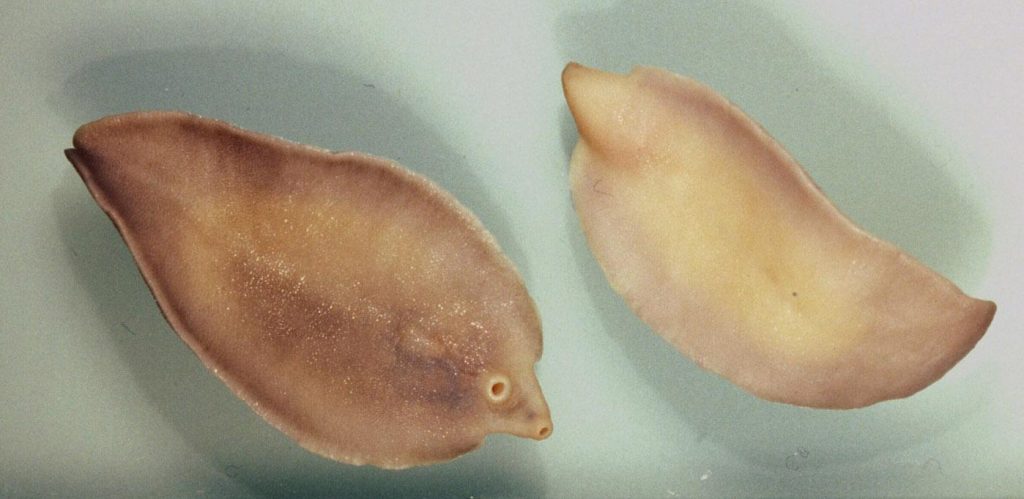
- 6-8 weeks after ingestion, tiny leaf-shaped immature flukes burrow through the liver, causing significant damage.
- A further 4 weeks of maturation produces adult fluke who lay up to 5000 eggs per day. Eggs are shed through bile ducts, into the host’s intestine and arrive on pasture in the dung, ready to start the cycle again.
Disease in livestock
Symptoms in livestock depend on the number and stage of fluke present and fit into 3 categories:
Acute fluke:
Mainly affecting sheep (rather than cattle) in early autumn. Warm wet summers allow rapid fluke development and ingestion of large numbers of infective stages, which migrate on mass into the liver. Liver damage, blood loss and secondary infection with clostridial bacteria (Black’s disease) can result in many sudden deaths, severe lethargy, abdominal pain and inappetence.
Sub-acute fluke:
Mainly affecting sheep in winter (now late autumn too). Migration of fewer immature fluke than would cause acute disease, results in rapid weight loss, poor fleece quality, dullness, lethargy and weakness. Deaths may sometimes occur despite treatment.
Chronic fluke:
Affecting any grazing livestock throughout the year. Symptoms include chronic weight loss / failure to thrive, reduced milk production, diarrhoea, reduced fertility, poor fleece and occasionally “bottle jaw” (fluid accumulation under the skin).
Diagnosis
Acute/sub-acute disease may be suspected on farm history and clinical signs and supported by assessing blood liver and protein parameters. Confirmation is by postmortem examination.
Chronic disease may be confirmed by demonstrating fluke eggs in dung samples and monitoring response to treatment. Other causes such as Johnes disease, worms, salmonella and inadequate nutrition should also be ruled out.
Treatment
Treatment of clinically affected animals is with flukicides (medication to kill fluke). Very few flukicides are available, so it is vital that they are used appropriately to preserve their efficacy.
Many flukicides kill only adult fluke so are not appropriate for treatment of acute/subacute cases. Only treatments containing Triclabendazole will kill fluke down to 2 weeks old; however, resistance is well documented. Triclabendazole must not be used in cows producing milk for human consumption. Speak to your vet for treatment advice and ensure that correct administration methods are used.
Severely clinically affected animals may struggle to respond to treatment and recovery to full productivity may be limited.
Establishing and monitoring farm status
- Have there been any previously confirmed case of liver fluke on the holding?
- Has liver fluke been identified (even as an incidental finding) during any postmortem examinations?
- Have previous dung samples for worms also been checked for fluke eggs?
- If you send animals direct to slaughter (not via market) have you any abattoir feedback regarding condemnation of “flukey” livers?
If the answer is yes to any of these questions, fluke is present on your holding and a monitoring and control plan should be established with your vet.
If the answer is no to all of the above, your holding may be “fluke free” but NOT NECESSARILY! This can only be confirmed through ongoing surveillance.
Dung samples
Dung samples are easily collected by stock keepers, tested at your vets giving rapid results at low cost, however they identify fluke egg which are only produced by adult fluke 10-12 weeks after infection. In the absence of fluke eggs, immature (non-egg producing) fluke may still be present and cause disease.
Dung samples may be submitted to the lab for coproantigen testing, which can identify immature fluke from around 6-8 weeks after ingestion, although the sensitivity of this test is relatively low until 10 weeks.
Blood samples
Blood sampling requires safe restraint of animals, but the process is quick and simple for your vet. Samples are sent to the laboratory for ELISA analysis and can identify exposure to liver fluke from as early as 2-4 weeks after infection.
Using first season grazing animals as “sentinels” can be very useful as their exposure to fluke reflects the current situation on farm. Usually 10 individuals are sampled from a group and this is often tied in with other planned handling, e.g. BVD calf check tests or at weaning time. Negative results indicate no recent exposure, however the significance of this must be interpreted on a farm-by-farm basis and according to the season so speak to your vet to discuss the results.
Repeated sampling is required for ongoing monitoring, especially as wildlife such as rabbits and deer may bring fluke onto any holding.
Postmortem Examination
On any livestock holding there will sadly be losses from time to time. Do not let these be in vain! These animals hold key information on the background health of your herd/flock so please speak to your vet and take the opportunity for postmortem examination when it is available and appropriate. Very freshly dead or euthanased animals are required for full postmortem sampling, but liver fluke damage and even fluke themselves are visible to the naked eye with no need for laboratory submission.
Preventing fluke
If your holding is lucky enough to be fluke free…keep it that way! Implement a strict biosecurity policy for livestock joining, visiting or returning to the holding to avoid bringing fluke (worse still, resistant fluke!) onto the pasture. Discuss best practices with your vet and include details in your farm health plan. Isolate incoming animals from the main flock/herd and ideally house them to avoid pasture contamination until testing and treatment can be completed. If mud snails are present on farm, once fluke gets in, it will not leave!
If fluke are already present on your holding, strict biosecurity is still important to avoid buying in resistant fluke – those that are not readily killed by flukicide treatments. Quarantine treatments should be followed up with efficacy testing to confirm that fluke have been effectively removed. Once resistant fluke are present on a farm, future control and treatment becomes very challenging.
Controlling fluke
Focusing on flukicides alone is not sustainable as resistance will continue to develop faster than new flukicides become available. Work with your vet to develop a practical and dynamic fluke control plan which reflects your holding risk levels, grazing, livestock and aims. Liver fluke control must combine the strategic use of flukicide treatments (aiming to prevent disease but also to reduce pasture contamination) alongside sustainable environmental measures to reduce livestock contact with snail habitats and promote healthy soil and grassland.
Mud snail habitats are boggy, bare, exposed mud areas with little water movement, so typically the edges of watercourses, in vehicle tracks, around leaking water troughs or on heavily poached areas around feeders.
Measures to reduce snail habitats and livestock access may include;
- Fencing off boggy areas if it is viable to do so
- Moving feeders regularly to avoid ground becoming poached
- Fixing leaking water sources
- Identifing pastures that are likely to be heavily contaminated with fluke and avoiding grazing these if possible and especially in Autumn.
- Prioritising low-risk pastures for sheep rather than cattle
- Minimising soil compaction that may occur through heavy grazing or the use of heavy machinery. Compaction prevents soil being able to absorb water, which instead remains on the surface.
- Maintaining good grazing sward height and vegetation cover to help protect soil from erosion.
- Using multispecies sward to promote healthy root structures can also help minimise erosion and improve water absorption away from the surface.
- Employing rotational grazing
Is there a vaccine against liver fluke?
A vaccine against liver fluke would be a hugely valuable tool for livestock producers to protect animal welfare and minimse losses due to the parasite, whilst also acting in an environmentally responsible manner. Unfortunately, we do not have a vaccine available…yet.
Years of dedicated research have demonstrated the complex interactions between immature fluke and the host animals’ immune system, as well as identifying particular antigens (proteins) from within the fluke themselves which may form the basis of effective vaccines .
Further commitment is required however, from veterinary pharmaceutical companies in order to produce a commercially available vaccine. Given the negative effects of liver fluke on animal welfare and production, as well as the long-term concerns over resistance and protecting environments for biodiversity, it must be hoped that they are making this a priority.
Further information
Control of Liver Fluke in Cattle
AHDB Liver Fluke Control in Grazing Livestock
Liver Fluke Diagnostic Testing
NADIS – Liver Fluke Control in Cattle
NADIS – Liver Fluke Control in Sheep

Discussion